

Thinking About Home
As if everyone had one

“A place for your stuff, a place for your dreams
From cradle to grave, whatever our means”
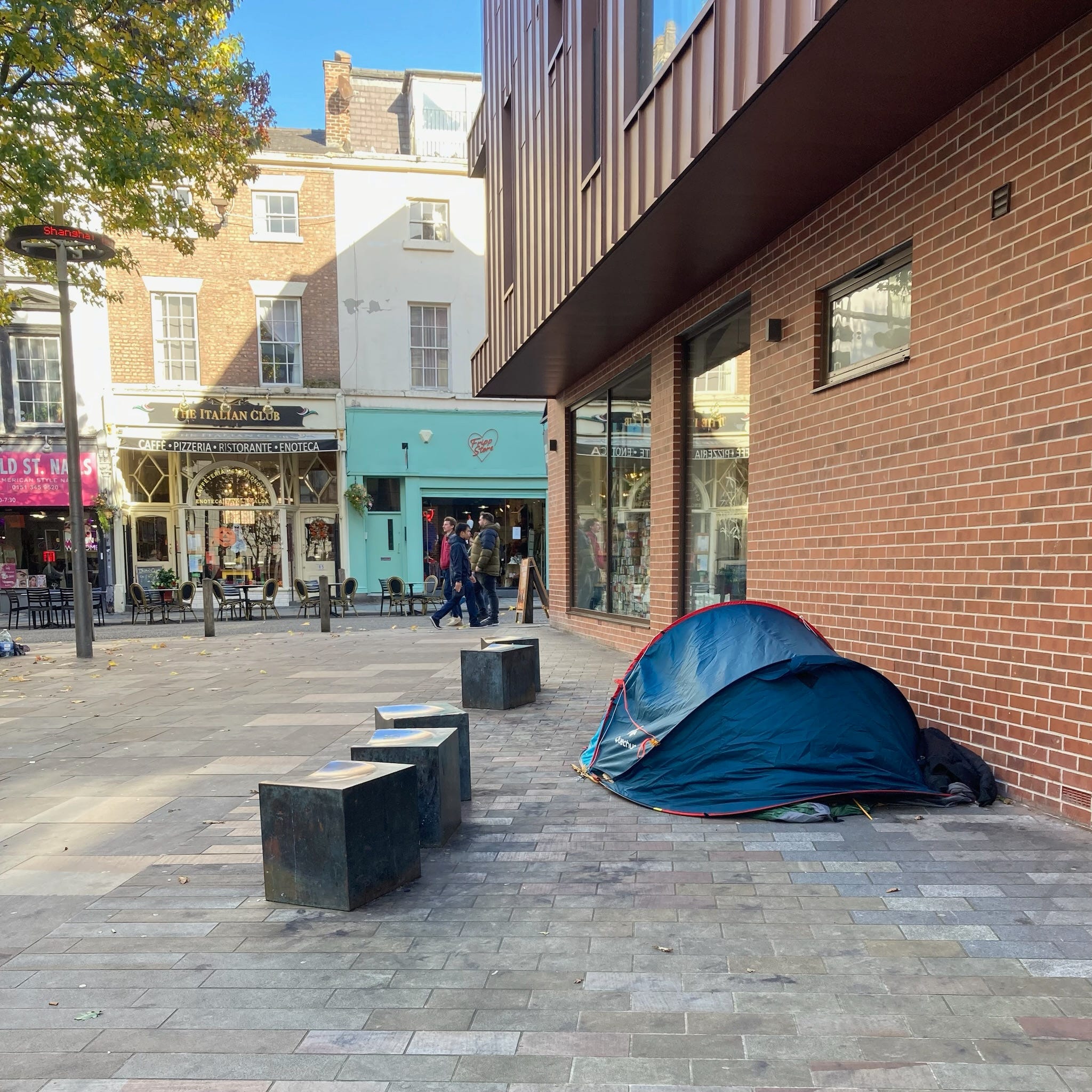
A good thing I forgot to mention about here in the parallel universe village of Liverpool when I first wrote about it the other week, is that everyone here has a home. Meaning that while walking along the village lanes as I described them I never once came across any of those evidences of homelessness we all remember only too well from ancient times. You know, those pop-up tents that would be all along the shopping streets and someone’s bedraggled belongings in every empty doorway. There’s none of that. Instead everyone who wants one or needs one now has a home. All sorts of homes these are, for all sorts of people: people in pairs; or who want to live on their own; homes for families or others who have decided to live in groups; like friends growing older together or people helping each other out in various ways; for young people wanting their first flats; and older ones wanting somewhere smaller now. At the end of every day all these many and various peoples of the village of Liverpool have a home to come home to.
Audio version here
To get technical for a minute there are now two distinct categories of homes here in the village.
There are those bought or rented privately from others. For people who want to own where they live or prefer the choice and flexibility private renting can give them. That’s one category.
The other is the whole variety of homes people are now able to rent from the Village Council. These are for those who either can’t afford to buy their houses, or prefer renting from the council so they’re more easily able to transfer to a different village home as their lives and needs change over the years.
So, and to carry on being technical just a little while longer, as you can probably see by having those two categories of homes in the village we’ve divided our supply of housing into two distinct groups:
Those rented or bought privately from others are called ‘Market Homes.’
Whereas the ones rented from the Council are called ‘Village Homes’ and would never be on the market.
Very different things then. Like say the difference between a bookshop and a public library. Or a private garden and the Council allotment where I’m writing this. Both containing similar things but dealing with them in completely different ways.
And why? Well because we found here in the Village, in those ancient days I mentioned, that having all our homes as the market type just didn’t work. Even though we persisted in trying all sorts of ways to make it work, it never once did. So our streets, subways and empty shop doorways kept filling up, time after time, with people without homes.
Whereas now? Now everyone has a home of one type or the other that they can afford, the Village is a pleasanter place for me to walk around. It feels generally better off somehow. Even in the shops, now villagers of all kinds can afford to go in them and buy what they need. Rather than so many having to queue up at food banks, the food banks are beginning to close down. Because they’ll soon not be needed any more.
So it’s a story of happy days here in the village.
Except of course none of the story I’ve just told you is true, not one word of it. Because all the good things I’ve described are only happening in my imaginary and parallel universe version of the village of Liverpool.
But wouldn’t it be good if we could make all of it come true somehow? In Liverpool and all the other villages we live in. If we could stop people in positions of power or self-interest saying things like “Yes but” and “But what about” and “The thing you have to understand Ronnie” in that defending the indefensible way. And could use our undoubted collective intelligence to do something so basically humane as make sure everyone who wants one, (and that would be just about everyone right?) - make sure everyone who wants one has got a secure home and therefore the beginnings of a believable story they can build the rest of their lives around.
Because making people live in pop-up tents and empty shop doorways is no way to run a village, never mind whole countries, is it?1
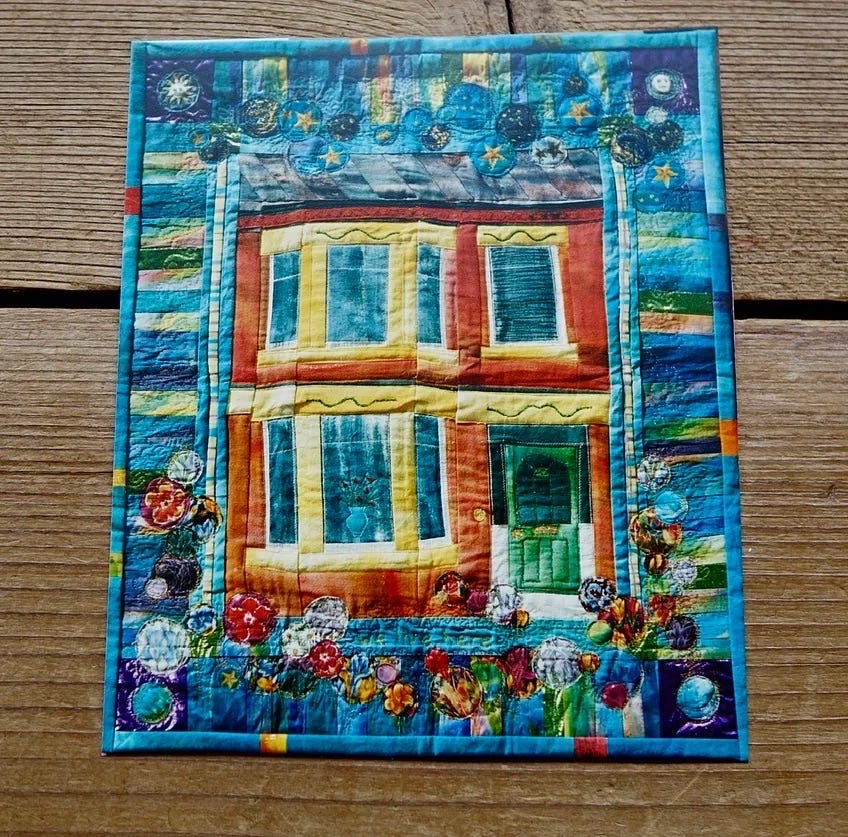
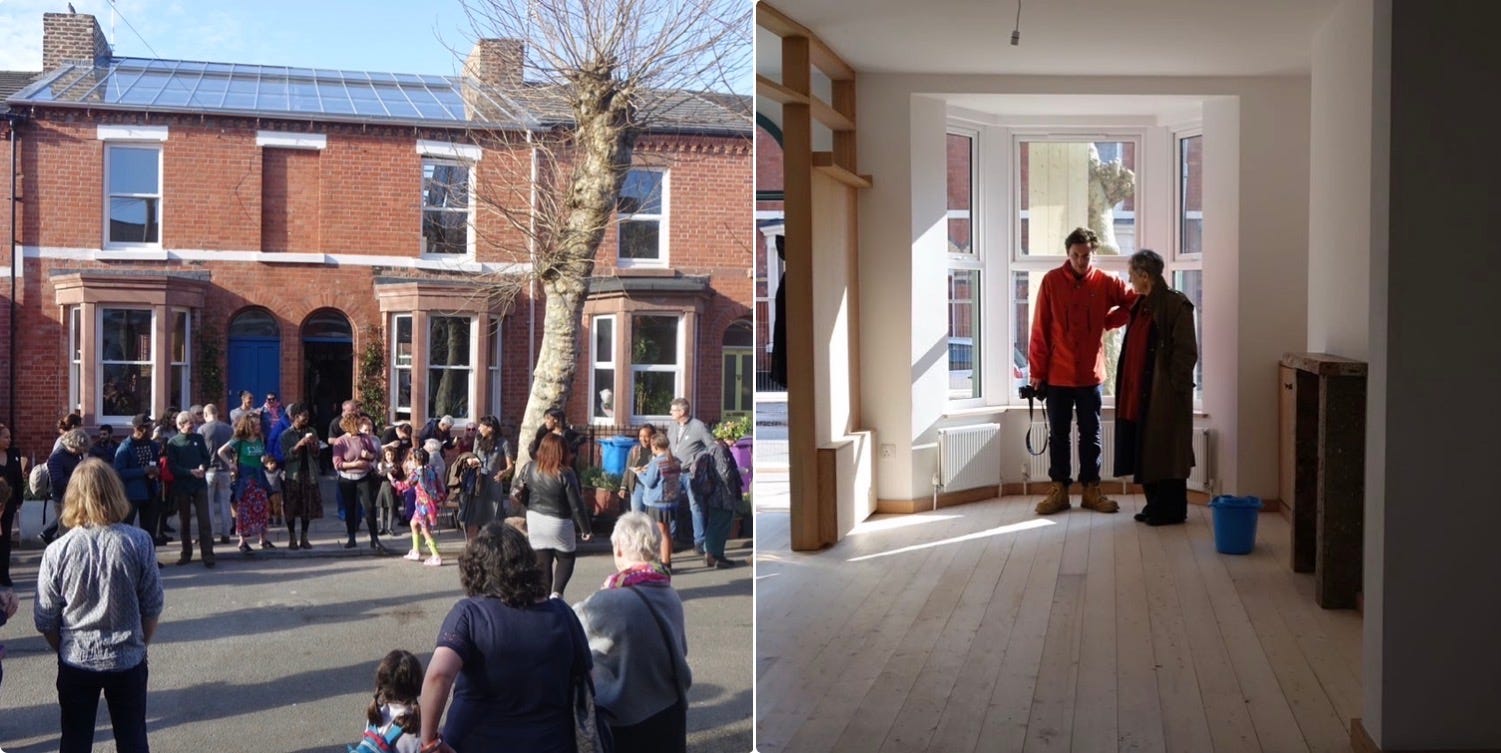
To end then, here’s something I wrote a couple of years ago for the Homebaked Community Land Trust in Anfield, up at the north end of our village. It fits with the telling of the story you’ve just heard or read. And describes a core belief held and followed the whole of my now done working life. That having a home for every child born is a basic cradle to grave human right. So if it seems to you like my words might be of some use, then please do borrow them.
Home is a Basic Human Right2
Home is a feeling as much as a place
A feeling once had you’ll never erase
A key in a locked door
In for the night
Home is a basic human rightHome is “Back to mine,” home is “I’m out”
Home is a place to feel special about
A place for your stuff, a place for your dreams
From cradle to grave, whatever our meansWhatever our troubles, in love or in grief
Home is a sacred human belief
No ifs buts or maybes, no could be or might
Home is a basic human rightHome
Is a basic
Human right.
Talking of whole countries, on this recent BBC Panorama my friend Abi O’Conor talks truth to very reluctant power. Particularly about how councils and governments relying on the property industry to fix our housing crises won’t and never has worked.
Home is a Basic Human Right © 2024 by Ronnie Hughes is licensed under Creative Commons Attribution-NonCommercial-NoDerivatives 4.0 International. See a copy of the license here. Licensed as a Creative Commons piece to encourage anyone who hears or reads it to be able to pass it on to wherever they feel its words might help.
Hi Ronnie.
Another wonderful quiet story that as you can imagine is close to my heart. It’s the dream we had when we began our careers in social housing all those years ago. A dream that was never fulfilled. I would like to use your poem in a post on LinkedIn. It sums up perfectly what many of us feel. I will attribute it of course and link readers to your site here. Take care.
I’d not see your Homebaked poem before Ronnie – love it. Madness to think that some people think it’s something to be commodified and commercialised. (And Sarah’s quilt is beautiful!)